


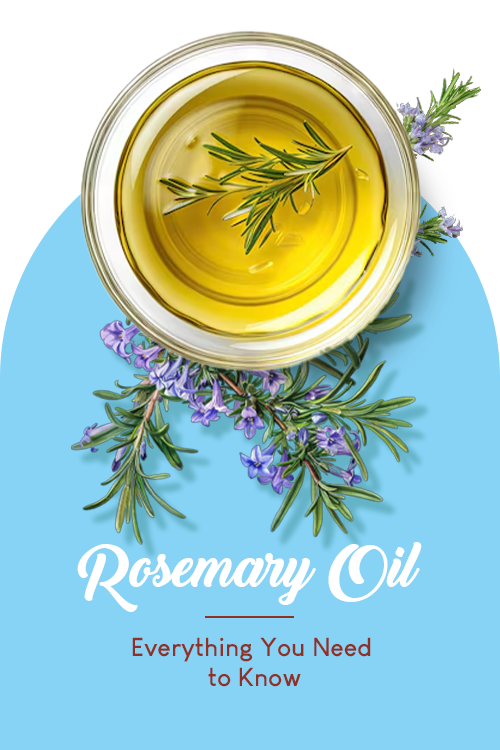
Why Rosemary Oil Deserves a Place in Your Routine?
Let me guess: you've seen rosemary oil all over your feed—some girl massaging it into her scalp, a guy raving about it for beard growth, or someone casually calling it a “miracle herb” while their curls bounce in slow motion. Sounds familiar?
I’ve been there, too. That’s why I decided to dig deep past the hype, into the roots of Ayurveda, backed by science, and tested by real life use. Whether you’re new to the natural beauty world or you’re just trying to figure out if this oil is worth the shelf space, you’re in the right place.
Let’s break it all down together. No fluff. Just what really works.
Want rosemary and jojoba in one ready-to-use oil? Careberry Organic Rosemary & Jojoba Hair Oil is a ready-diluted scalp oil for dandruff and dry scalp: UKCert certified organic, AYUSH-licensed, no mineral oil. 200 ml at ₹599 on careberry.in, with a free neem wood comb, free delivery over ₹299 and cash on delivery.
Comparing brands? Read our guide to choosing the best rosemary oil for hair in India.
What This Blog Covers:
- What rosemary oil is and how it’s made
- What ancient Ayurveda and modern science agree on
- How to actually use it (without making your hair greasy)
- My favourite ways to make it part of a busy routine
- Real user questions answered simply and clearly
So, What Is Rosemary Oil, Really?
Rosemary oil is made by steam distilling the leaves of the Rosmarinus officinalis plant. It smells like the earth after rain herbaceous, sharp, a little sweet. But more than its scent, this oil has been used for centuries across cultures to awaken the mind, soothe the skin, and support a healthy scalp.
In Ayurveda, it aligns with herbs that stimulate energy, sharpen focus, and rejuvenate the scalp. It's the kind of oil you reach for when your system (or your hairline) needs a nudge.
- Ayurvedic Wisdom: Ancient texts describe rosemary like herbs as "medhya" brain tonics that also support blood circulation and scalp health.
- Science Says: Its key compounds (like cineole and rosmarinic acid) fight inflammation, improve microcirculation, and protect against oxidative stress. That’s nerd speak for: it clears out the junk and gets your scalp and skin thriving.
What Ayurveda & Science Say About Rosemary Oil
Ayurveda's Take:
Ayurveda isn’t just about trends. It’s about balance. And rosemary brings the heat literally. It’s warm, energizing, and perfect for Vata and Kapha types who tend to have cold, stagnant systems (think dry scalp, thinning hair, low energy).
“Where there is flow, there is life. Where there is stagnation, disease begins.” — Charaka Samhita
Rosemary encourages flow of blood, of energy, of focus.
Science Weighs In:
In 2015, a study compared rosemary oil to minoxidil (the chemical hair regrowth stuff). Guess what? After six months, the rosemary group saw hair-count gains similar to the 2% minoxidil group, with less scalp itching. It was one small study, so it is promising rather than proof, but it explains the buzz.
Early research also suggests it may:
- Calm scalp inflammation
- Support healthy hair follicles
- Balance skin bacteria (hello, clearer skin!)
Okay, But How Do I Actually Use It?
If you’re like me, you want results but also, you want things to be simple and not messy. Here’s how I use rosemary oil without turning my bathroom into an oil slick:
For Hair Growth:
- Massage Mix: 3–5 drops into coconut or jojoba oil. Massage into scalp, leave for 30 mins. Rinse.
- In Shampoo: Add a drop or two to your shampoo.
- Daily Mist: Mix a few drops with rose water in a spray bottle. Shake, spritz, done.
For Skin:
- Spot Fix: Mix with jojoba and dab on pimples.
- Facial Steam: Two drops in a bowl of hot water. Drape a towel over your head and let it work its magic.
For Mood:
- Diffuse it while working or journaling. It clears the mental fog like a champ.
Is It Safe? What Should I Know?
Mostly, yes. But here’s the friendly checklist:
- Always dilute it. This isn’t the time to go pure and proud.
- Do a patch test.
- Avoid if you’re pregnant, unless cleared by a pro.
- Not for kids. Keep it out of reach (and off baby scalps).
What You Need to Remember
- Rosemary oil isn’t just hype it’s rooted in centuries of healing and supported by promising early science
- Use it 2–3 times a week for hair, skin, and clarity
- Always dilute, patch test, and breathe deep
Oh, And One More Thing...
If you’re looking for a clean, ready-diluted rosemary hair oil that actually feels like it's made with care? The one I recommend (and yes, use myself) is Careberry’s Organic Rosemary & Jojoba Anti-Dandruff Hair Oil. It blends the best of Ayurvedic wisdom with clean beauty values: UKCert certified organic, vegan and with no mineral oil.
Real FAQs People Ask (and Now You’ll Know)
Q: Can rosemary oil regrow hair?
A: Early research is encouraging: one small 2015 study found results similar to 2% minoxidil after six months. Larger studies are still needed, and sudden or patchy hair loss should be checked by a doctor.
Q: How often should I use it?
A: 2–3 times a week is the sweet spot. If you’re using it as a mist, daily is fine.
Q: Will it make my hair oily?
A: Only if you go overboard. Just a few drops in a carrier oil is enough.
Q: Can I use it with castor oil?
A: Totally! Rosemary and castor oil work well together: rosemary for the scalp, castor for nourishing the lengths. See our Rosemary + Castor combo.
Q: Does it really help with focus?
A: Yup. Diffuse it during study or work—it’s like a herbal brain wake-up.






Laisser un commentaire
Tous les commentaires sont modérés avant d'être publiés.
Ce site est protégé par hCaptcha, et la Politique de confidentialité et les Conditions de service de hCaptcha s’appliquent.