


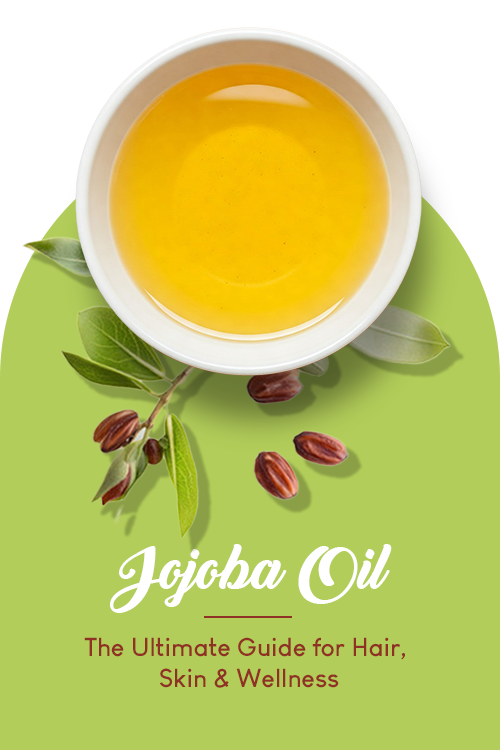
Why Everyone’s Talking About Jojoba Oil (And Why You’ll Love It Too)
Quick answer: Jojoba oil is a light, non-greasy liquid wax that closely resembles the skin’s natural sebum. For hair, people use it as a scalp massage oil (a teaspoon, 30–60 minutes before a wash), as a pre-wash mask with coconut or rosemary oil, or a drop or two on dry ends to tame frizz. It suits most hair and skin types; patch-test first and use it externally only.
If there’s one natural oil that quietly does it all without the flash or hype it’s jojoba oil. Pronounced “ho-ho-ba,” this golden liquid isn’t just another beauty trend. It’s a skin mimicking, hair loving, Ayurveda-friendly gem that works across seasons, skin types, and lifestyles.
In this blog, I’ll walk you through everything I’ve learned and what Ayurveda, science, and everyday users have discovered about jojoba oil. If you’ve ever wondered, Is it worth adding to my routine? this guide will give you your answer.
Want jojoba and rosemary in one ready-to-use hair oil? Careberry Organic Rosemary & Jojoba Hair Oil is a ready-diluted scalp oil for dandruff and dry scalp: UKCert certified organic, AYUSH-licensed, no mineral oil. 200 ml at ₹599 on careberry.in, with a free neem wood comb, free delivery over ₹299 and cash on delivery.
Comparing brands? Read our guide to choosing the best rosemary oil for hair in India.
What This Blog Covers:
- What jojoba oil is (and why it's technically a wax)
- Ayurvedic wisdom on jojoba and its healing energy
- Scientific breakdown of its compounds and effects
- Best ways to use jojoba oil for hair, skin, and wellness
- Safe usage, real-life tips, and common myths
- FAQs people ask online answered clearly
What Is Jojoba Oil, Really?
Jojoba oil comes from the seeds of the Simmondsia chinensis plant, native to desert regions like Arizona and Rajasthan. Though we call it an oil, jojoba is actually a liquid wax ester, the closest match to human sebum (your skin’s natural oil).
This makes it incredibly lightweight, non comedogenic, and easily absorbed by both scalp and skin without clogging pores.
- Texture: Light, golden, and silky
- Shelf Life: Naturally stable and long lasting (thanks to its waxy composition)
What Ayurveda & Science Say About Jojoba Oil
Ayurvedic Perspective:
While jojoba is not a traditional Ayurvedic herb, its properties align closely with Pitta and Vata balancing:
- Calms inflammation and dryness
- Soothes irritated or acne-prone skin
- Supports soft skin and healthy-looking hair
- Works in rituals like Abhyanga (self-massage) due to its gentle warming energy
“That which nourishes the skin, nourishes the mind.” — Ayurvedic proverb
Scientific Benefits:
Jojoba oil contains:
- Vitamins E, B-complex: Help keep skin nourished
- Fatty acids (mostly gadoleic, oleic, and erucic acid): Help maintain the skin barrier
- Natural antioxidants: Fight oxidative stress, delay signs of aging
- Antimicrobial properties: Reduce bacteria without stripping skin
Research suggests that jojoba can:
- Improve skin hydration and elasticity (Journal of Ethnopharmacology, 2012)
- Support skin prone to dryness, irritation and breakouts
- Promote hair softness, strength, and shine without residue
How to Use Jojoba Oil in Real Life (Without the Grease)
For Hair:
- Scalp massage: Warm a teaspoon of oil and massage in gentle circles. Leave for 30–60 mins before washing.
- Pre-wash hydration mask: Mix with coconut or rosemary oil for extra strength.
- Frizz tamer: Rub 1–2 drops between palms and smooth over dry ends or flyaways.
For Skin:
- Moisturizer (face or body): Apply directly post cleansing absorbs fast, no stickiness.
- Makeup remover: Gently dissolves makeup without irritating sensitive eyes.
- Serum booster: Add a drop to your night cream for a glow-up while you sleep.
For Holistic Wellness:
- Abhyanga oil: Use for self-massage great for calming nerves and nourishing tissues.
- After-shave soother: Reduces razor bumps and irritation
- Lip and cuticle balm: One drop goes a long way!
Jojoba Oil Myths Busted
Myth 1: Oils clog pores.
Truth: Jojoba is non-comedogenic and often helps balance oily skin.
Myth 2: You can use any jojoba oil.
Truth: Purity matters. Cold-pressed, hexane-free, and organic varieties give the best results.
Myth 3: It’s just for dry skin.
Truth: Works equally well for oily, sensitive, and acne-prone skin because it mimics sebum.
Key Takeaways
- Jojoba oil is a skin-identical, deeply nourishing oil with both Ayurvedic and scientific backing
- Suits most skin and hair types, even oily or acne-prone
- Easy to integrate into routines without heaviness or residue
- Cold-pressed and organic forms offer the most benefits
If You’re Looking for a Trusted Option…
For your scalp and hair, Careberry’s Organic Rosemary & Jojoba Hair Oil pairs jojoba with rosemary in a ready-to-use blend: UKCert certified organic, AYUSH-licensed, no mineral oil. It suits dry or flaky scalps and frizzy lengths, and every bottle on careberry.in comes with a free neem wood comb.
Real FAQs People Ask
Q: Is jojoba oil good for hair?
A: Many people use it as a light scalp and hair oil because it absorbs without a heavy, greasy feel. It helps keep the scalp and lengths moisturised and hair soft and shiny. Results vary from person to person, and sudden or patchy hair fall is a reason to see a doctor.
Q: How often should I use jojoba hair oil?
A: 2 to 3 times a week as a pre-wash scalp massage works for most people, with a drop or two on dry ends between washes if needed.
Q: Can I use jojoba oil on oily or acne-prone skin?
A: Usually, yes. It is light and non-comedogenic, so it rarely clogs pores. Patch-test first.
Q: Is jojoba oil safe for babies or during pregnancy?
A: Pure jojoba is very gentle, but check with your doctor or paediatrician first during pregnancy or for babies, and always patch-test.
Q: Does it help with dandruff?
A: It can help, especially when massaged into the scalp to reduce dryness and flaking.
Q: Can it be used daily?
A: Absolutely. It’s light enough for everyday use on both hair and face.
Q: What’s the best time to apply it?
A: Right after cleansing or a shower when your skin or scalp is slightly damp.






Оставить комментарий
Все комментарии перед публикацией проверяются.
Этот веб-сайт защищается hCaptcha. Применяются Политика конфиденциальности и Условия использования hCaptcha.